
Today a label works like a small billboard — it has only a few seconds to attract attention and convince the customer to choose your product.
The label as a sales tool
When a customer stands in front of a shelf, they decide within seconds — and the label often makes the difference. It must quickly communicate product benefits and set you apart from competitors.
What really works on a label
An effective label is built on simplicity and clarity. Key elements that provenly support sales:
- Clearly communicated benefit — e.g. "sugar-free", "organic" or "extra durable" — the customer must instantly understand the added value.
- Clear iconography — icons enable quick understanding without reading.
- Link to digital content — a QR code can lead to brand story, certifications or detailed product information.
- Consistent visual style — colours and typography should match brand identity and be easily recognisable.
Technologies that increase label value
Beyond design, print and finishing technology play a crucial role. They can significantly influence product perception.
- Screen printing — ideal for rich colours, opacity and striking effects. Often used for a more premium look.
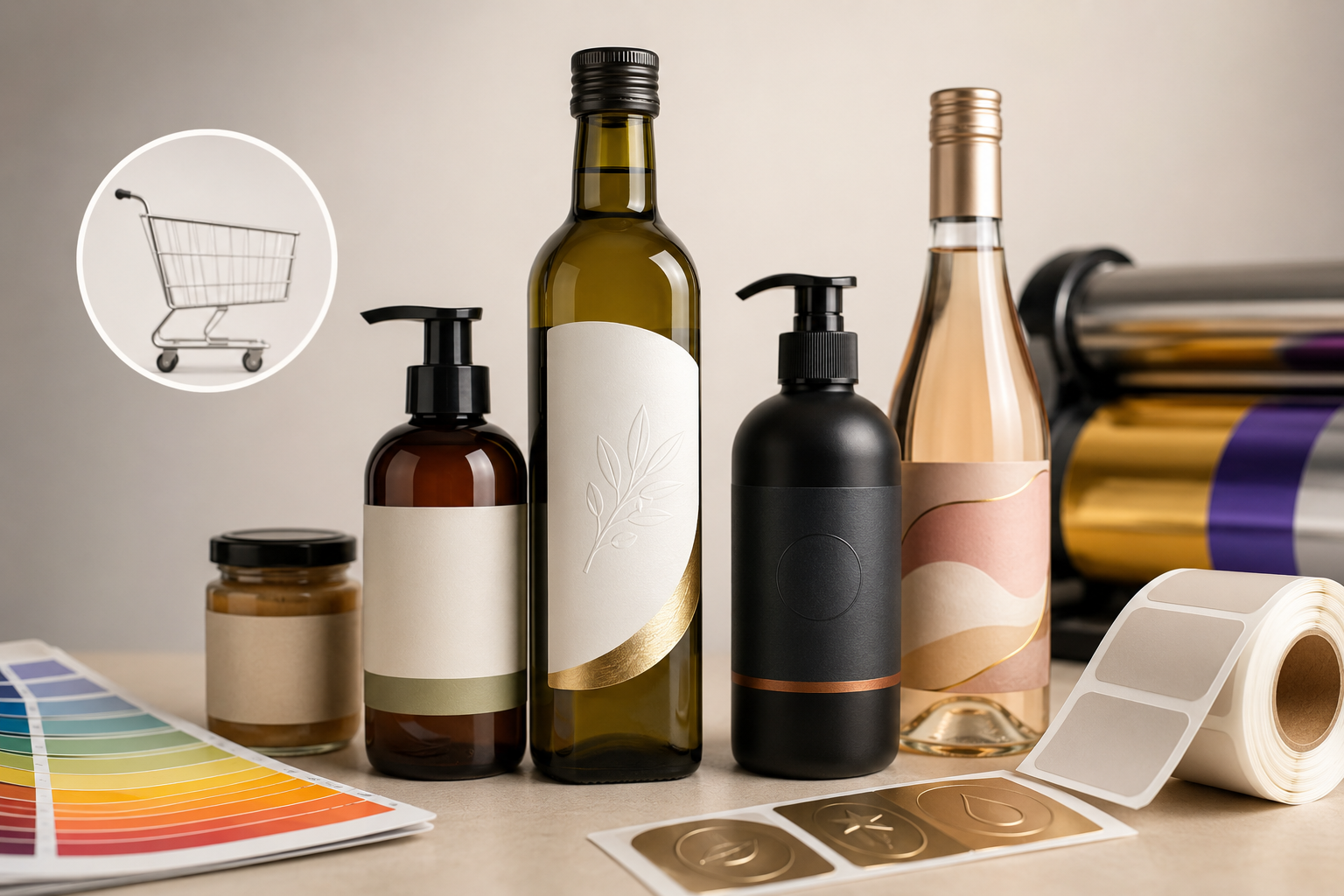
- Finishing (e.g. foil, embossing) — adds a tactile dimension. Physical contact with texture often increases perceived product value — especially in premium segments.
- UV printing — suitable for instant curing, high durability and vivid colour. Used where quality and speed matter.
- HP Indigo (digital print) — high-quality digital printing for flexible production, variable data and fast-moving products.
Tailored to product type
Each segment has specific requirements:
- Premium products — invest in detail — screen print, partial varnish or embossing create strong visual and tactile impact.
- Retail and FMCG — focus on readability, quick orientation and logistics. Digital print (e.g. HP Indigo) and UV print work well here.
Practical tip
Do not choose the final design only at your desk. Prepare 2–3 label variants and test them on the shelf — even as simple mockups.
Often the winner becomes obvious within seconds.