

You can have the most beautiful design, but if the label smears in the fridge, fades in the sun or tears when squeezing a tube, the overall product impression is gone. Material choice is not just a technical detail — it is a strategic decision affecting appearance, function and product lifespan.
How to choose the right one so your label survives anything?
1. Paper: aesthetic classic for dry environments
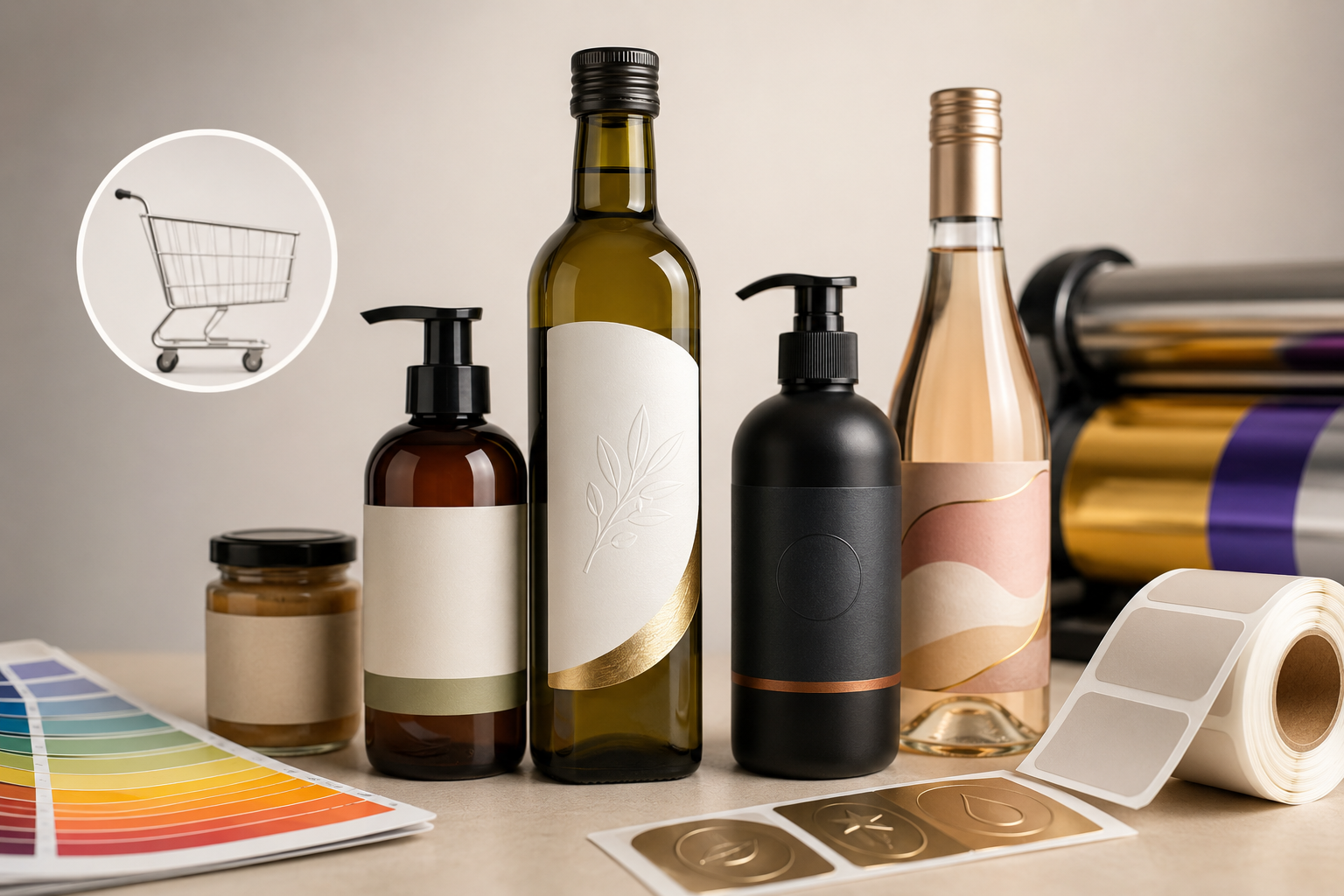
For specialty coffee, loose tea, luxury candles or wine, paper is ideal. It feels organic, prints beautifully and helps create a premium, natural impression — and is cost-effective.
- Watch out for: moisture, grease and abrasion. Paper does not belong in the bathroom or freezer.
2. Plastic (PE, PP, PET): the durability champion
Shampoos, shower gels, motor oils or frozen foods — film dominates here. Films are waterproof, resist grease and are flexible enough for squeezable tubes.
- Watch out for: higher cost and environmental considerations (material choice, recyclable options).
3. Logistics and marking: thermal vs. TTR overprint
In logistics and warehouses, speed, readability and label lifespan matter. Two common types:
- Direct thermal: labels react to heat, no ink required. Cheap and fast — ideal for e-commerce address labels or food weight tags.
Downside: short lifespan; they darken and fade in sun and heat.
- Thermal transfer (TTR): paper or film with a ribbon. Extremely durable, does not fade or smear. Perfect for pallet labels, long-term storage and barcodes that must stay readable for months or years.
Before you decide, ask these 3 key questions:
- Where will the product be used? Must it resist water, frost or grease? (If yes, choose film.)
- How long must it last? A few days for delivery (direct thermal) or months in warehouse and on shelf (TTR, paper, film)?
- What impression should it create? Premium look ( textured paper) or maximum function (film / durable logistics label)?
Final tip: there is no universal label. The right combination of material, adhesive and print technology always depends on the specific use. If unsure, our technologists will advise and propose a tailored solution. Expert consultation saves money and complaint headaches.